
Navigating the complex world of Medicare drug plans can feel like deciphering an ancient map, intricate and filled with hidden pathways. You, as a senior, are tasked with finding the coverage that best suits your unique pharmaceutical needs. This guide is designed to illuminate those pathways, helping you make an informed choice for your prescription drug benefits.
Original Medicare, which includes Part A (Hospital Insurance) and Part B (Medical Insurance), does not typically cover outpatient prescription drugs. Think of Original Medicare as the sturdy frame of your house, providing essential structure, but lacking the plumbing that delivers vital resources like your medications.
Part A’s Role (or Lack Thereof)
Medicare Part A primarily covers inpatient hospital stays, skilled nursing facility care, hospice care, and some home health care. Its direct coverage for prescription drugs is limited to those administered during an inpatient hospital stay. For your day-to-day medications taken at home, you will need additional coverage.
Part B’s Limited Scope
Medicare Part B covers doctor visits, outpatient care, durable medical equipment, and some preventive services. While Part B does cover certain prescription drugs administered by a health care provider, such as infusions or injections in a doctor’s office or hospital outpatient setting, it generally does not cover medications you take at home.
For seniors navigating the complexities of Medicare drug plans, understanding the various options available can be a daunting task. A helpful resource for comparing different Medicare drug plans is the article found at Explore Senior Health, which provides valuable insights and tools to assist seniors in making informed decisions about their prescription coverage. This article breaks down key factors to consider, such as premiums, deductibles, and formularies, ensuring that seniors can find a plan that best meets their healthcare needs.
The Essential Addition: Medicare Part D Explained
This is where your journey truly begins in seeking prescription drug coverage. Medicare Part D, also known as the Prescription Drug Benefit, is an optional outpatient prescription drug benefit for individuals with Medicare. It was created to help lower prescription drug costs for beneficiaries.
How Part D Plans Operate
Part D plans are offered by private insurance companies that have been approved by Medicare. These companies contract with pharmacies to create a network where you can fill your prescriptions. The plans vary significantly in terms of costs, covered drugs, and pharmacy networks. Choosing the right plan is akin to selecting the right tools for a specific job; the wrong tool can make the task unnecessarily difficult or even impossible.
Different Types of Part D Plans
You primarily encounter two main types of Part D plans:
Standalone Prescription Drug Plans (PDPs)
These plans are available to individuals enrolled in Original Medicare (Part A and/or Part B) or certain Medicare Special Needs Plans (SNPs). They are independent of your Original Medicare, acting as a separate, dedicated insurance policy for your medications. This is like having a specialized toolkit just for your pharmaceutical needs, separate from your general homeowner’s toolkit.
Medicare Advantage Prescription Drug Plans (MA-PDs)
If you choose to enroll in a Medicare Advantage Plan (Part C), which bundles your Part A and Part B benefits, it will likely include prescription drug coverage. These plans are often referred to as MA-PDs. Think of a Medicare Advantage Plan as an all-inclusive resort; it offers a broad range of services, including your prescription drug coverage, often with a single point of contact. However, just as with a resort, it’s crucial to examine the details of what’s included and what might be an extra charge or require going outside the resort’s offerings for specific needs.
The Crucial Components: Comparing Costs and Premiums

Understanding the financial landscape of Medicare drug plans is paramount. The costs are not a single, monolithic figure; they are a mosaic of different components that, when pieced together, reveal the true price of your coverage.
Premiums: The Monthly Membership Fee
Your Part D plan will have a monthly premium. This is the baseline cost for having the drug coverage in place. Premiums can vary widely based on the plan’s benefits, the insurance provider, and your geographic location. Some plans may also have higher premiums for more comprehensive coverage or a wider network of pharmacies.
Deductibles: Your Initial Out-of-Pocket Responsibility
Many Part D plans have an annual deductible. This is the amount you must pay out-of-pocket for your prescription drugs before the plan begins to pay its share. Deductibles can range from $\$0$ to over $\$500$ per year, depending on the plan. Some plans may have a deductible that applies to all covered drugs, while others may have different deductibles for different tiers of medications. It’s crucial to know if your regular medications will be subject to this initial payment.
Copayments and Coinsurance: Sharing the Drug Cost
Once you’ve met your deductible (if applicable), you will typically pay a copayment or coinsurance for your prescriptions.
Copayments: A Fixed Amount
A copayment (copay) is a fixed dollar amount you pay for each prescription, such as $\$10$ for a generic drug or $\$40$ for a brand-name drug. This is predictable and can make budgeting easier for your medication expenses.
Coinsurance: A Percentage of the Cost
Coinsurance is a percentage of the drug’s cost that you pay after meeting your deductible. For example, you might pay 25% of the cost of a brand-name drug. This means your out-of-pocket expense will fluctuate based on the price of the medication itself.
The Coverage Gap (Donut Hole): A Temporary Limiting Period
Historically, Part D plans had a coverage gap, commonly referred to as the “donut hole.” While significant changes have been made to close this gap, it’s still important to understand its concept. In the past, after you and your plan had spent a certain amount on covered drugs, you would enter a coverage gap where you were responsible for a higher percentage of the drug costs. However, due to legislative changes, the coverage gap has been largely eliminated for most beneficiaries. You now pay no more than 25% for both brand-name and generic drugs while in the coverage gap. This is a crucial improvement, ensuring that your access to necessary medications is not severely curtailed at a critical point.
Catastrophic Coverage: Your Safety Net
Once you have spent a substantial amount on your prescription drugs (both by you and your plan), you will enter the catastrophic coverage phase. In this phase, your out-of-pocket costs for covered drugs are significantly reduced. From 2024 onwards, once you reach a certain out-of-pocket limit, you will pay a small coinsurance or copayment for your covered drugs for the rest of the year. This serves as a vital safety net, protecting you from financially devastating costs for very expensive medications or lengthy treatment regimens.
Navigating the Formulary: What Your Plan Covers
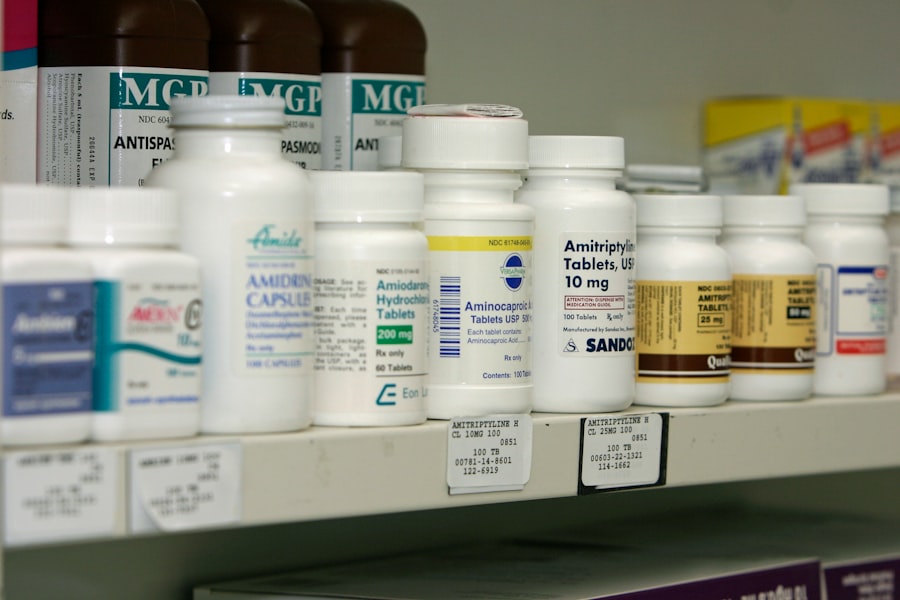
The formulary is the heart of your Part D plan; it’s the list of prescription drugs that the plan has chosen to cover. It’s not a universal list of all available medications, but rather a curated selection. Choosing a plan with a formulary that aligns with your current and anticipated medication needs is one of the most critical steps in your comparison process.
Tiers: Categorizing Your Medications
Formularies are typically organized into tiers. Each tier represents a different cost-sharing level for you, the beneficiary. Understanding these tiers is key to predicting your out-of-pocket expenses.
Tier 1: Preferred Generics and Low-Cost Brand Drugs
These are generally the lowest-cost medications. You’ll typically pay a small copayment for drugs in this tier. Generic drugs are chemically equivalent to their brand-name counterparts but are usually much less expensive.
Tier 2: Generics and Mid-Cost Brand Drugs
Drugs in this tier will have a slightly higher copayment or coinsurance than Tier 1 medications.
Tier 3: Preferred Brand Drugs and Some Specialty Drugs
These tiers usually involve higher copayments or coinsurance. Preferred brand drugs are those where the plan has negotiated a better price with the manufacturer.
Tier 4: Non-Preferred Brand Drugs and Some Specialty Drugs
You will likely face even higher out-of-pocket costs for drugs in these higher tiers.
Tier 5: Specialty Drugs and High-Cost Medications
This tier is reserved for very expensive drugs, often used to treat complex conditions. The copayments or coinsurance in this tier can be substantial, even with catastrophic coverage.
Prior Authorization and Step Therapy: Restrictions You Might Encounter
Some plans may require prior authorization or step therapy for certain medications.
- Prior Authorization: For some expensive or potentially misused drugs, the plan may require your doctor to get approval from the insurance company before it will cover the prescription. This is like getting permission before undertaking a significant project.
- Step Therapy: In some cases, the plan may require you to try a less expensive drug first (a “first-step” drug) before it will cover a more expensive one, even if the more expensive drug is what your doctor initially prescribed. This is designed to encourage the use of cost-effective alternatives when medically appropriate. Your doctor will need to document why the initial drug is not suitable for you to get coverage for your preferred medication.
When it comes to navigating the complexities of Medicare drug plans, seniors often find themselves overwhelmed by the numerous options available. A helpful resource for understanding these choices can be found in a related article that provides insights into comparing different Medicare drug plans effectively. For more information on this topic, you can read the article here. This guide offers valuable tips that can assist seniors in making informed decisions about their healthcare coverage.
Pharmacy Networks: Where You Can Fill Your Prescriptions
| Plan Name | Monthly Premium | Deductible | Coverage Gap (Donut Hole) | Copay for Generic Drugs | Copay for Brand-Name Drugs | Star Rating (1-5) | Network Type |
|---|---|---|---|---|---|---|---|
| SilverScript Choice | 45 | 445 | Yes | 5 | 40 | 4.0 | PDP |
| Humana Walmart Value | 30 | 415 | Yes | 3 | 35 | 3.5 | PDP |
| UnitedHealthcare MedicareRx | 55 | 445 | Yes | 10 | 50 | 4.2 | PDP |
| AARP MedicareRx Preferred | 40 | 435 | Yes | 7 | 45 | 4.1 | PDP |
| Cigna Medicare Rx | 35 | 400 | Yes | 6 | 42 | 3.8 | PDP |
The pharmacy network is the group of pharmacies that have contracted with your Part D plan. Where you can get your medications filled will impact your costs and convenience.
Preferred Pharmacies: Potential Savings
Many plans have “preferred” pharmacies. You will typically pay a lower copayment or coinsurance at these pharmacies. These are often larger chain pharmacies or mail-order pharmacies with whom the plan has negotiated special pricing.
Non-Preferred Pharmacies: Higher Costs and Potential Limits
If you choose to fill your prescriptions at a pharmacy that is not in your plan’s network, or even at a non-preferred pharmacy within the network, you will likely pay more. In some cases, out-of-network pharmacies may not be covered at all, or you may have to pay the full retail price and then submit a claim for reimbursement, which can be a cumbersome process.
Mail-Order Pharmacies: Convenience and Potential Cost Advantages
Mail-order pharmacies can offer convenience, as your medications are delivered directly to your home. They can also sometimes offer lower costs, especially for long-term prescriptions, as they often have lower overhead than brick-and-mortar pharmacies.
Making the Right Choice: Strategies for Comparison
The process of comparing plans can seem daunting, but with a systematic approach, you can identify the optimal solution for your needs.
Step 1: Identify Your Prescription Needs
Before you even look at plans, create an accurate list of all the prescription medications you currently take. Include the dosage and frequency for each. Also, consider any medications you anticipate needing in the near future. This list is your Rosetta Stone, allowing you to translate your needs into the language of formularies.
Step 2: Research Plans in Your Area
Medicare’s website offers a Plan Finder tool that allows you to enter your medications and zip code to compare available Part D plans in your region. This is an invaluable resource, acting as your compass in the Medicare landscape. You can also find information on your state’s health insurance assistance program, which can offer free, personalized counseling.
Step 3: Analyze Formulary Coverage and Tiers
For each plan you are considering, carefully examine its formulary. Does it cover all your current medications? Are your medications in lower, more affordable tiers? If a medication is not covered, or is in a high tier, consider if there are suitable alternatives on the formulary that your doctor would approve.
Step 4: Compare Costs Beyond Premiums
Don’t let a low monthly premium lure you in without looking closer. Calculate your estimated annual out-of-pocket costs by considering:
- Annual premiums
- Deductibles
- Copayments/coinsurance for all your medications based on their tier and estimated usage throughout the year.
Using the Plan Finder tool can help with these estimations, but it’s also wise to do your own calculations.
Step 5: Evaluate Pharmacy Networks
Consider where you typically fill your prescriptions. Are those pharmacies in the plan’s network? Are they preferred pharmacies? If not, factor in the potential higher costs or the inconvenience of traveling to a preferred pharmacy.
Step 6: Review Plan Ratings and Customer Service
Look for any available ratings for the insurance companies offering the plans. Higher-rated plans generally indicate better member satisfaction and service. If possible, research customer service reviews to gauge how responsive and helpful the plan is when questions or issues arise.
Important Considerations for Enrollment Periods
Your window for enrolling in or changing a Part D plan is crucial.
- Initial Enrollment Period (IEP): When you first become eligible for Medicare (typically around age 65), you have a 7-month window to enroll in a Part D plan. Missing this window can result in a late enrollment penalty.
- Annual Election Period (AEP): This period runs from October 15th to December 7th each year. During this time, you can switch from one Part D plan to another, or enroll if you didn’t initially, or make changes to your Medicare Advantage Plan.
- Special Enrollment Periods (SEPs): Certain life events, such as losing other coverage, moving, or qualifying for Extra Help (a program to assist low-income individuals with Medicare costs), may allow you to enroll or change plans outside of the AEP.
Choosing the right Medicare drug plan is an investment in your health and financial well-being. By diligently comparing costs, formularies, and pharmacy networks, you can secure the coverage that best supports your ongoing health needs and provides peace of mind.

Maximizing Retirement Income with Tax-Efficient Asset Location
FAQs
What is a Medicare drug plan?
A Medicare drug plan, also known as Medicare Part D, is a prescription drug coverage plan offered to Medicare beneficiaries to help cover the cost of medications.
Who is eligible to enroll in a Medicare drug plan?
Seniors who are enrolled in Medicare Part A and/or Part B are generally eligible to enroll in a Medicare drug plan.
How do I compare different Medicare drug plans?
You can compare Medicare drug plans by reviewing their formularies, premiums, deductibles, copayments, and coverage rules to find the plan that best fits your medication needs and budget.
Can I change my Medicare drug plan after enrolling?
Yes, you can change your Medicare drug plan during the annual Open Enrollment Period, which typically runs from October 15 to December 7 each year.
Are all prescription drugs covered under Medicare drug plans?
No, coverage varies by plan. Each Medicare drug plan has its own list of covered medications, called a formulary, which may not include every prescription drug.