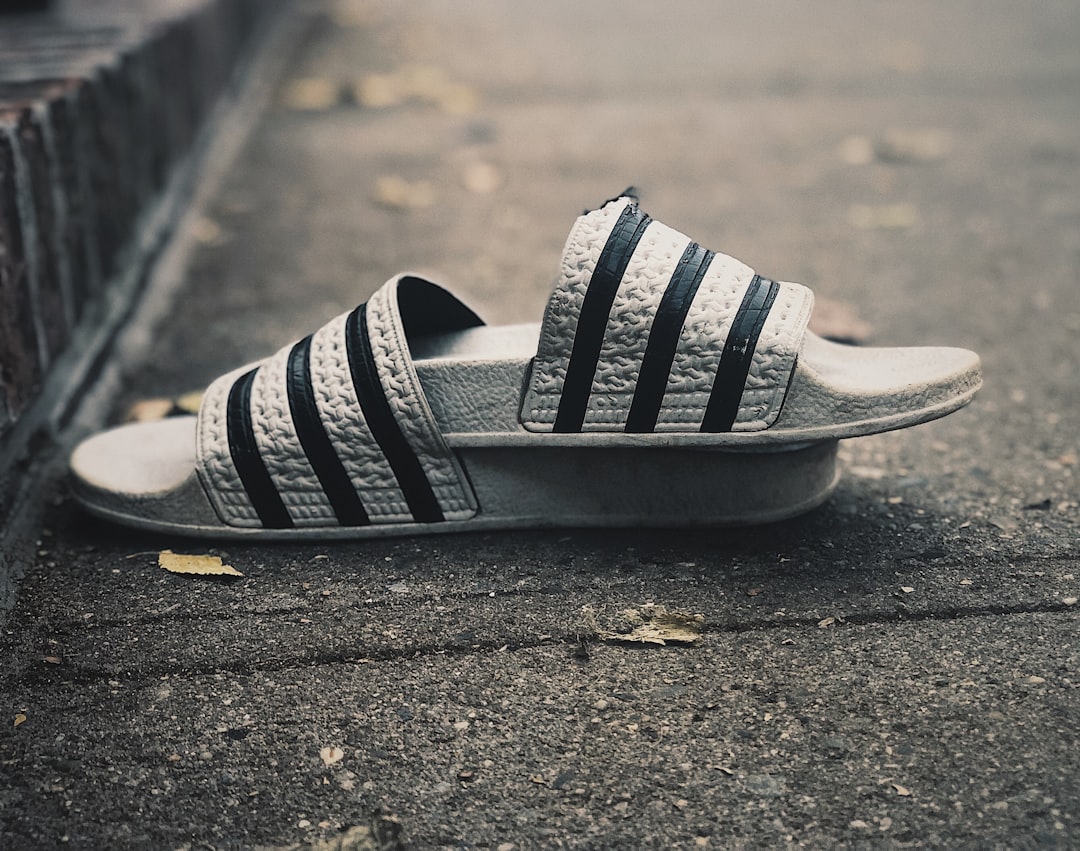
You’ve likely experienced it: that momentary sway, a slight lurch when changing direction, or the unsettling feeling of being off-kilter. Balance, an often-overlooked yet fundamental aspect of human locomotion and overall well-being, is a complex interplay of sensory inputs and motor responses. From the intricate vestibular system within your inner ear to proprioception, the body’s awareness of its position in space, numerous mechanisms tirelessly work to keep you upright. When these systems falter, even subtly, the consequences can range from minor discomfort to serious injury. This article explores a surprisingly simple, yet profoundly effective, intervention for improving balance: the humble squishy slipper.
Understanding Your Body’s Balance System
Before delving into the solution, it’s crucial to grasp the intricate machinery that maintains your equilibrium. Your body is a finely tuned instrument, constantly calibrating its position and movement. To learn effective strategies for fall prevention, watch this informative video.
The Vestibular System: Your Inner Gyroscope
Imagine a spirit level, but instead of air bubbles, it’s filled with sensitive hairs and fluid. That’s a simplified analogy for your vestibular system, located deep within your inner ear. This system is comprised of two main parts:
- Semicircular Canals: These three canals, oriented in different planes, detect angular head movements, like nodding, shaking, or tilting. As your head moves, the fluid inside the canals shifts, bending tiny hair cells that send signals to your brain.
- Otolith Organs (Utricle and Saccule): These structures are responsible for sensing linear acceleration and gravity. They contain tiny calcium carbonate crystals (otoconia) that, due to their inertia, lag behind head movements, bending hair cells and informing your brain about your head’s position relative to gravity, whether you’re accelerating forward or backward, or simply standing still.
When these signals conflict or are degraded, you experience dizziness, vertigo, and impaired balance.
Proprioception: The Body’s Internal GPS
Think of proprioception as your body’s internal GPS. It’s the subconscious sense of where your body parts are in relation to each other and to the environment, even without looking.
- Muscle Spindles: Located within your muscles, these sensory receptors detect changes in muscle length and the rate of change. They provide your brain with real-time feedback on muscle stretch and tension.
- Golgi Tendon Organs: Situated at the junction of muscles and tendons, these receptors monitor muscle tension. They act as a protective mechanism, preventing excessive force generation that could lead to injury.
- Joint Receptors: Found in the ligaments and capsules surrounding your joints, these receptors provide information about joint position and movement.
A rich tapestry of information from these proprioceptors is continuously fed to your brain, allowing it to construct a precise map of your body’s posture and movement.
Vision: The Guiding Light
Your eyes provide a substantial portion of the information your brain uses for balance. When you walk, your visual field provides cues about your speed, direction, and surrounding obstacles.
- Peripheral Vision: This is particularly important for balance, as it allows you to detect subtle movements and maintain spatial awareness without directly focusing on them.
- Object Tracking: Your eyes constantly track objects in your environment, helping your brain to predict your trajectory and adjust your balance accordingly.
Disruptions to any of these systems – vestibular, proprioceptive, or visual – can significantly impact your balance.
The Role of Footwear in Your Stability
You wouldn’t run a marathon in flip-flops, nor would you perform surgery in stilettos. The footwear you choose profoundly influences your body’s interaction with the ground and, consequently, your balance.
Hard Soles: A Rigid Foundation
Traditional shoes, particularly those with firm, unyielding soles, offer a rigid platform. While this might seem beneficial for stability, it can paradoxically hinder your body’s natural balance mechanisms.
- Reduced Proprioceptive Feedback: Hard soles act as a barrier, diminishing the tactile and pressure information that your foot’s numerous receptors send to your brain. It’s like wearing thick gloves while trying to tie a knot; your sense of touch is dulled.
- Limited Foot Articulation: A stiff sole restricts the natural movement and articulation of your foot’s 26 bones and 33 joints. This can inhibit the subtle micro-adjustments your foot makes to adapt to uneven surfaces.
Consider the analogy of walking on stilts. While they offer height, they greatly reduce your connection and responsiveness to the ground. Hard soles, to a lesser extent, create a similar disengagement.
Barefoot: The Ultimate Connection
Historically, humans walked barefoot, constantly engaging their foot’s complex sensory and motor systems.
- Maximized Sensory Input: Walking barefoot provides immediate and unfiltered sensory information from the ground, allowing for rapid adjustments to terrain variations.
- Enhanced Muscle Activation: Barefoot walking encourages the activation of intrinsic foot muscles, which are crucial for arch support and dynamic stability.
While impractical for much of modern life, the benefits of barefoot walking highlight the importance of foot engagement for balance.
Squishy Slippers: A Unique Algorithmic Solution
Enter the squishy slipper: a deceptively simple item often relegated to comfort rather than therapeutic utility. However, its unique properties offer a surprising advantage in balance training.
The Principle of Dynamic Instability
The key lies in the controlled instability provided by the soft, yielding sole of a squishy slipper. Unlike a hard, flat surface that offers predictable stability, a squishy sole introduces a controlled amount of perturbation.
- Continuous Micro-Adjustments: When you walk on a squishy surface, your body is constantly making tiny, subconscious adjustments to maintain equilibrium. This is akin to walking on a soft, undulating sand dune rather than a paved sidewalk.
- Heightened Proprioceptive Engagement: The yielding material of the slipper directly engages the pressure receptors and mechanoreceptors in your feet, providing a rich stream of proprioceptive feedback to your brain. Your brain is forced to “listen” more closely to your feet.
This constant engagement acts as a low-intensity, real-time balance exercise, without the need for conscious effort or specialized equipment. You are passively training your balance simply by walking around your home.
The Neurological Re-calibration
Think of your balance system as an adaptive learning algorithm. When you introduce a novel, dynamic challenge, like walking in squishy slippers, the algorithm is forced to refine its parameters.
- Enhanced Sensorimotor Integration: The increased proprioceptive input from the feet demands greater integration with vestibular and visual information. Your brain becomes more adept at merging these diverse sensory streams.
- Strengthening of Stabilizing Muscles: The continuous micro-adjustments engage and strengthen the deep intrinsic foot muscles, ankle stabilizers, and core musculature, all of which play a vital role in maintaining upright posture.
This re-calibration process leads to improved overall balance, even when you’re not wearing the slippers. It’s like a software update for your body’s stability system.
Practical Application and Scientific Observations
Implementing squishy slippers into your daily routine is remarkably straightforward, offering a low-barrier intervention for balance improvement.
Integrating Squishy Slippers into Your Daily Life
The beauty of this approach lies in its simplicity. You don’t need a gym membership or specific exercises.
- Home Use: Wear them as your primary indoor footwear. From walking to the kitchen to getting up from a chair, every step becomes a subtle balance exercise.
- Mindful Movement: While wearing them, pay attention to the subtle shifts in your weight and the constant adjustments your body makes. This mindful awareness can further enhance the training effect.
It’s important to choose slippers that offer a truly “squishy” or yielding sole, not merely a soft upper. The material should compress and adapt under your weight, providing that dynamic instability.
Corroborating Evidence and Future Research
While dedicated, large-scale clinical trials specifically on “squishy slippers” are limited, the underlying principles are well-supported by broader research in biomechanics and neuroscience.
- Balance Training Studies: Numerous studies have demonstrated the effectiveness of unstable surfaces (e.g., wobble boards, foam pads) in improving balance in various populations, including older adults and athletes. Squishy slippers operate on a similar principle, albeit at a lower intensity.
- Proprioceptive Training: Research consistently shows that training methods that enhance proprioceptive feedback lead to significant improvements in balance and reduced fall risk. The direct sensory engagement of squishy slippers aligns with this principle.
- Geriatric Rehabilitation: In older adults, where balance deficits are particularly prevalent, interventions that encourage foot muscle activation and sensory feedback are crucial. Squishy slippers present a gentle, non-threatening approach to addressing this.
Future research could focus on quantifying the specific impact of varying degrees of slipper “squishiness” on different balance parameters, and comparing their efficacy against traditional balance interventions.
Beyond the Foot: A Holistic View of Balance
While squishy slippers offer a tangible and accessible solution, it’s crucial to remember that balance is a multifaceted phenomenon.
Complementary Approaches to Stability
Integrating other practices can amplify the benefits you experience from using squishy slippers.
- Regular Exercise: Activities like walking, tai chi, yoga, and strength training directly improve muscle strength, flexibility, and coordination, all essential for balance.
- Vision Care: Ensuring your vision is optimized through regular eye exams and appropriate corrective lenses removes a potential sensory impediment to balance.
- Medication Review: Certain medications can have side effects that impair balance, such as dizziness or drowsiness. Consult with your healthcare provider to review your medication regimen if you suspect it’s contributing to balance issues.
- Home Safety: Modifying your home environment to remove tripping hazards (e.g., loose rugs, clutter) and ensuring adequate lighting can significantly reduce the risk of falls, especially if you are prone to balance problems.
Think of it as building a robust stability platform, where squishy slippers are a crucial foundational element, but other pillars are equally important.
The Psychosocial Dimension of Balance
The fear of falling, particularly as you age, can itself contribute to reduced mobility and balance problems.
- Confidence Building: Experiencing improved balance, even subtly through wearing squishy slippers, can boost your confidence and encourage greater physical activity, creating a positive feedback loop.
- Autonomy and Independence: Maintaining good balance is paramount for preserving independence and quality of life. Simple interventions like squishy slippers contribute to this overarching goal.
In conclusion, you are equipped with a complex and adaptive balance system. When this system requires recalibration or a gentle nudge towards greater efficiency, the unassuming squishy slipper emerges as a surprisingly effective tool. By introducing a controlled, dynamic instability, these simple items engage your proprioceptive system, enhance sensorimotor integration, and contribute to a more robust, responsive balance algorithm within your body, all while you comfortably navigate your home. Embrace the soft challenge and discover a firmer foundation for your steps.
WATCH THIS 🛑 WARNING: One Fall Could Cost You $18,000 This Month
FAQs
What are squishy slippers?
Squishy slippers are a type of footwear made from soft, flexible materials such as foam or gel that provide cushioning and comfort to the feet.
How can squishy slippers cause balance problems?
Squishy slippers can cause balance problems because their soft and flexible soles may reduce stability and support, making it harder to maintain proper footing, especially on uneven or slippery surfaces.
Who is most at risk of balance problems when wearing squishy slippers?
Elderly individuals, people with existing balance or mobility issues, and those with weak ankle or foot muscles are more likely to experience balance problems when wearing squishy slippers.
Are squishy slippers safe to wear indoors?
While squishy slippers can be comfortable for indoor use, caution is advised as they may increase the risk of slips, trips, or falls due to their lack of firm support and traction.
Can squishy slippers be modified to improve balance?
Some squishy slippers can be modified by adding non-slip soles or arch supports to enhance stability, but it is important to ensure that any modifications do not compromise comfort or fit.
What are alternatives to squishy slippers for better balance?
Alternatives include slippers with firmer soles, good arch support, and non-slip bottoms, which provide better stability and reduce the risk of balance-related accidents.
Should people with balance issues avoid squishy slippers altogether?
People with significant balance problems or a history of falls should consult a healthcare professional before using squishy slippers and may be advised to choose more supportive footwear.
How can one reduce the risk of balance problems while wearing squishy slippers?
To reduce risk, wear squishy slippers only on flat, dry surfaces, avoid walking on slippery floors, and consider using slippers with added grip or support features.